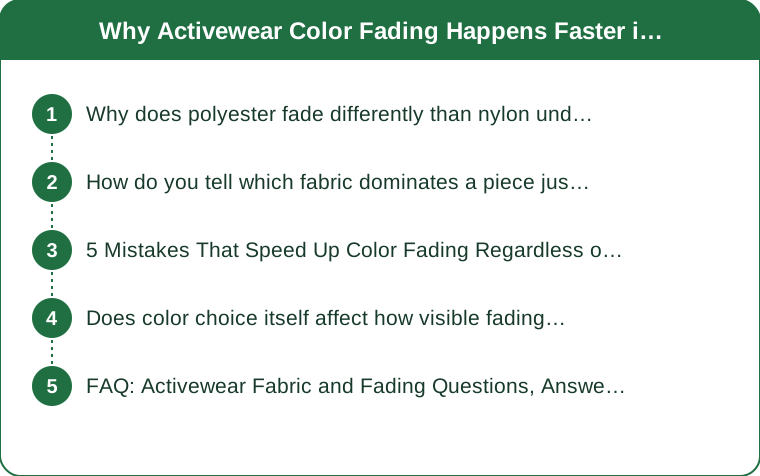
Why Activewear Color Fading Happens Faster in Some Fabrics Than Others
Quick Answer: Polyester-heavy activewear tends to fade faster from UV exposure and heat, while nylon-blend pieces hold color better against UV but are more sensitive to chlorine and harsh detergents. Knowing which fabric dominates a piece changes which specific care habit actually protects its color longest.
Two activewear pieces washed identically can fade at completely different rates - the fabric blend, not your laundry routine alone, is often the deciding factor.
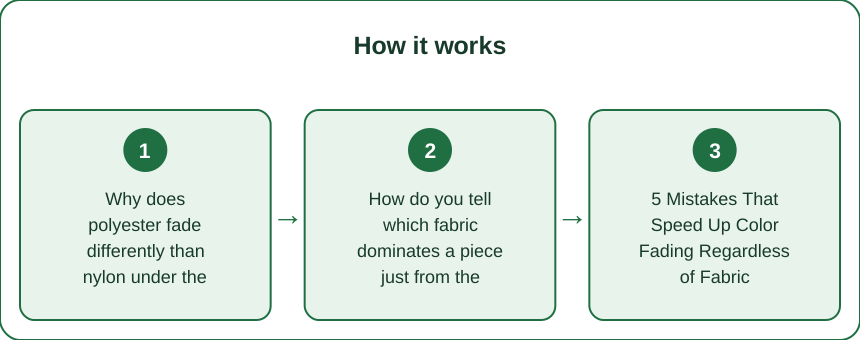
Why does polyester fade differently than nylon under the same conditions?
Polyester’s dye bonds are more vulnerable to UV light and high heat specifically, which is why polyester-heavy pieces dried on high heat or left drying in direct sun tend to fade noticeably faster than the same piece air-dried in shade. Nylon holds UV-related color better but its dye structure is more reactive to chlorine and certain harsh detergent chemicals, which is why nylon swimwear or nylon-blend leggings sometimes fade fastest from pool exposure or strong detergents rather than sun.
This means the same care routine can protect one fabric type while quietly damaging another - checking the fabric content tag actually matters for choosing the right precaution.
How do you tell which fabric dominates a piece just from the care tag?
The fabric content percentage is usually listed directly on the care tag - a piece listed as 80% polyester, 20% spandex should be treated with polyester’s UV and heat sensitivities in mind, while an 85% nylon, 15% spandex piece should be treated with nylon’s chlorine and detergent sensitivities in mind.
Blends close to 50/50 benefit from following both precautions simultaneously - shade drying and gentle, chlorine-free detergent - since neither fabric’s vulnerability is safely ignorable in a true blend.
5 Mistakes That Speed Up Color Fading Regardless of Fabric
1. High-heat drying, which accelerates dye breakdown in polyester specifically but stresses spandex fibers in any blend. 2. Washing inside-out habit being skipped, which exposes the printed or dyed outer surface directly to detergent and friction rather than protecting it. 3. Using regular detergent with brighteners or bleach alternatives on nylon pieces, which can react poorly with nylon’s dye structure specifically. 4. Drying in direct sunlight to save time, which is one of the fastest ways to fade polyester-heavy pieces regardless of otherwise careful washing. 5. Overloading the washer, causing increased friction between garments that abrades dye at the surface level over repeated washes.
Does color choice itself affect how visible fading becomes over time?
Darker, saturated colors (black, navy, deep jewel tones) show fading more visibly than lighter or more muted colors, simply because the contrast between original and faded color is larger. This doesn’t mean dark colors fade faster in an absolute sense - the same fiber and dye degradation happens - but it becomes noticeable sooner on dark pieces than on already-lighter ones.
This is worth factoring into which pieces get the most careful treatment - a favorite black legging benefits more from shade-drying and gentle detergent than a light heather-gray piece would, since fading will show up faster on the darker piece regardless of fabric type.
FAQ: Activewear Fabric and Fading Questions, Answered
Does fabric weight (thick vs thin) affect fading speed too?
Somewhat - thinner, lighter-weight fabrics of the same material type tend to show fading slightly faster since there’s less fiber volume holding the dye, though fabric type remains the bigger factor overall.
Is cold-water washing actually enough to slow fading regardless of fabric?
Cold water helps meaningfully for both polyester and nylon by reducing heat-related dye breakdown, though it doesn’t fully offset UV exposure or chlorine-specific damage - it’s one part of a fuller care routine, not a complete fix alone.
Should I avoid buying blended fabrics because of this dual vulnerability?
Not necessarily - blends often offer better stretch and durability overall; knowing the blend ratio just tells you which precautions matter most, rather than being a reason to avoid blends entirely.
TL;DR:
- Polyester fades faster from UV and heat; nylon fades faster from chlorine and harsh detergents
- Check the care tag’s fabric percentage to know which precaution matters most for a given piece
- Dark, saturated colors show fading sooner even without fading faster in absolute terms
- Cold water and shade drying help both fabric types, but aren’t a complete fix alone
Matching your care routine to the actual dominant fabric, not a one-size-fits-all laundry habit, is what protects color the longest.
See It in Motion
Seen here: Super High Waist Embossed Yoga Leggings with Inner Pocket — shop it on bubblelime.com
Keep Reading
This article is for general informational and styling purposes only. Fit, sizing, and product availability may vary.