Which Summer Activewear Colors Still Work in September (and Which Do Not)
Quick Answer: Colors carry into fall based on undertone, not brightness. A warm, slightly muted bright — terracotta, marigold, rust-coral — reads seasonal in September. A cool, high-clarity bright — aqua, mint, hot pink — reads stranded. The test is whether the color could exist in a landscape in October.
Half your summer activewear will look completely normal in six weeks. The other half will look like you did not notice the season changed.
The difference is not how loud the color is. Plenty of loud colors work in fall. It is something more specific.

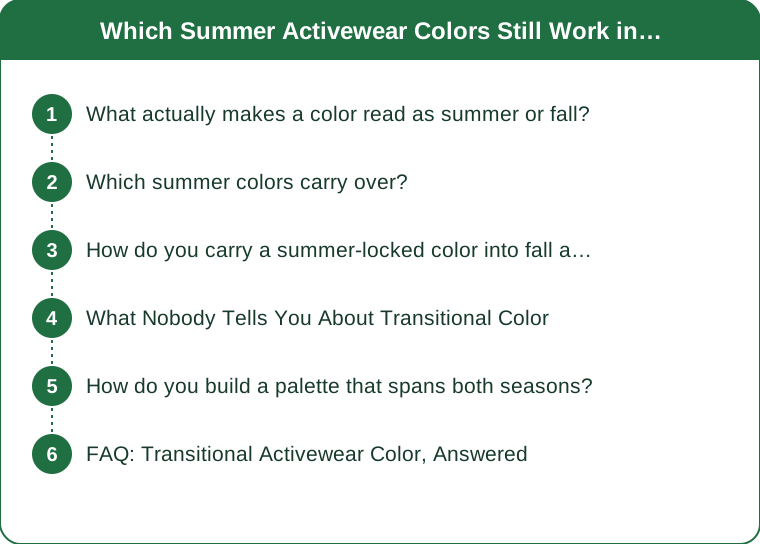
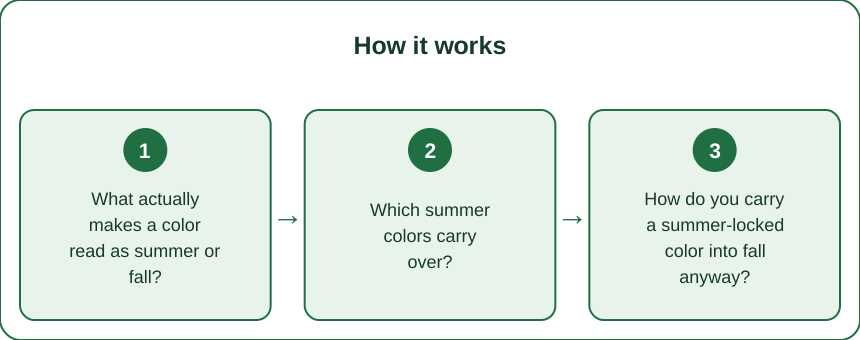
What actually makes a color read as summer or fall?
Two properties do most of the work: undertone and saturation clarity.
Undertone is whether the color leans warm (yellow-based) or cool (blue-based). Fall palettes skew warm because the natural reference points — turning leaves, low golden light, earth — are warm. A coral with an orange base carries into October easily; a coral with a pink base does not.
Clarity is how pure and bright the pigment is versus how much grey or brown is mixed in. Summer colors tend to be high-clarity — clean aqua, clean mint, clean lemon. Fall colors tend to be slightly muted, as though a small amount of brown were added. That trace of muting is what most people are actually reading as “autumnal.”
So the useful test is not is this bright? It is: could this color plausibly appear in an October landscape? Rust, ochre, olive, plum, deep teal, burgundy — yes. Neon aqua, baby pink, mint, and pastel lilac — no, and no amount of styling makes them look intentional in November.
Brightness was never the issue. A marigold set is loud and completely at home in October.
Which summer colors carry over?
Carry over easily — wear them straight through:
- Terracotta, rust, brick. The single most transitional family. Reads summer with white and fall with olive.
- Marigold, mustard, ochre. Warm yellows are autumn colors that happen to work in summer, not the reverse.
- Olive and sage. Genuinely all-season, and they anchor almost anything else you own.
- Warm coral and papaya — the orange-based versions specifically.
- Cream, oat, camel. Warm neutrals never leave.
- Deep teal and forest. Cool, but low-clarity enough to read seasonal.
- Plum, wine, berry. These arrive in fall rather than leaving with summer.
Struggle after early September:
- Aqua, turquoise, and cyan. The most clearly summer-locked family.
- Mint and pastel green.
- Hot pink and fuchsia, and pastel pinks generally.
- Lavender and periwinkle.
- Lemon and highlighter yellow — as opposed to warm mustard.
- Bright white, which starts looking stark against fall light rather than crisp.
Check the ones you actually own before buying anything. Most wardrobes already contain more transitional color than people assume.
How do you carry a summer-locked color into fall anyway?
You do not have to retire a favorite piece. You have to change what it sits next to.
Pair it with a fall neutral instead of a summer one. Aqua leggings with a white tee read July. The same leggings with an olive or charcoal top read September. The neutral is doing the season-setting, and it is a bigger lever than the color itself.
Move it down or under. A summer-locked color works better as leggings, socks, or a base layer under a fall-toned jacket than as the piece nearest your face and the top of the outfit.
Reduce the proportion. One aqua element in an outfit of camel and cream reads as an accent. Head-to-toe aqua reads as a leftover.
Add texture. A ribbed, brushed, or fleece-back fabric in a summer color reads more seasonal than the same color in a smooth, glossy summer performance knit. Texture signals season nearly as strongly as color does.
The piece that genuinely resists all four is bright white in a lightweight summer fabric — that is the one worth actually packing away.

What Nobody Tells You About Transitional Color
Light changes the color, not just the season. Autumn sunlight is lower and warmer, which flatters warm tones and drains cool ones. A mint set does not just feel out of season in October — it genuinely looks duller, because the light hitting it has less blue in it.
Sweat marks show differently as layers change. Summer colors are often chosen for how they handle visible sweat in a tank. Under a fall layer, the relevant surfaces change entirely, so a color you avoided in July might work fine in October.
Fall activewear drops in stores in July. If you want the transitional palette, the selection is best in mid-to-late summer and picked over by the time it actually feels like fall. Buying terracotta in August is the practical move.
Black is not automatically transitional. It works everywhere, but head-to-toe black in autumn light can read heavy and flat in a way it does not in winter. A warm neutral or an olive frequently looks better in September specifically.
Most brands release the same silhouette in a summer and a fall colorway. If a piece fits you well, the identical style in terracotta is usually available three months later — worth knowing before you force a summer color to work.
How do you build a palette that spans both seasons?
Aim for a small core that never needs swapping, plus a few seasonal accents.
The transitional core — buy these in warm neutrals and earth tones:
- Two pairs of leggings: one olive or charcoal, one black
- One sports bra and one tank in cream or oat
- One jacket or quarter-zip in terracotta, rust, or camel
That core works in July and in November without adjustment, and everything else builds off it.
Then the accents, which are where you spend on color: two or three pieces in whatever bright you love. If you buy those in the warm, slightly muted version — marigold rather than lemon, papaya rather than fuchsia — they carry across both seasons instead of one.
The practical version of the whole rule: when choosing between two shades of the same color, take the one with a trace of brown or grey in it. It will look nearly identical in summer and dramatically better in October, and it costs nothing to choose.
One exception worth keeping: if you run in low light, high-visibility neon is a safety feature and it overrides every seasonal consideration here. Wear the bright one.
FAQ: Transitional Activewear Color, Answered
Can I wear white activewear after Labor Day?
Yes — that rule has been dead for decades. What is true is that bright optical white looks starker in autumn light, while cream, oat, and off-white look richer. Swap the shade rather than the color.
How do I tell if a color is warm or cool?
Hold it next to something definitively warm (camel or mustard) and something definitively cool (true grey or navy). Whichever pairing looks harmonious tells you the undertone. Photographing both comparisons and looking at them small on your phone makes the answer obvious.
Is it worth buying a separate fall activewear wardrobe?
No. Most people need one or two transitional layer pieces — a quarter-zip and a jacket in a warm neutral — and the rest of what they own carries over with different pairing. Buy the layers, restyle everything else.
TL;DR: Undertone and clarity decide what carries into fall — brightness has nothing to do with it.
- Warm and slightly muted carries over: terracotta, marigold, olive, rust, plum, deep teal, cream.
- Cool and high-clarity strands: aqua, mint, hot pink, lavender, lemon, optical white.
- The test: could this color appear in an October landscape?
- To carry a summer color anyway — pair it with a fall neutral, move it below the waist, shrink the proportion, or choose a textured fabric.
- Buy the transitional core in warm neutrals — olive and black leggings, cream tank, terracotta layer — and spend on color in the accents.
- When choosing between two shades, take the one with a trace of brown in it.
High-vis neon for low-light running is the one exception. Safety wins over season.
See It in Motion
Seen here: Super High Waist Embossed Yoga Leggings with Inner Pocket — shop it on bubblelime.com
Keep Reading
This article is for general informational and styling purposes only. Fit, sizing, and product availability may vary.