The 30-Second Color Wheel Trick That Makes Any Activewear Combo Work
Quick Answer: Pick any color, then look directly across the color wheel — that opposite (complementary) color will almost always pair well, because complementary pairs create visual contrast your eye reads as intentional rather than random.
You own the coral leggings and a drawer of tops that all somehow feel wrong with them. The problem usually isn’t the pieces — it’s not knowing where to look on the wheel.
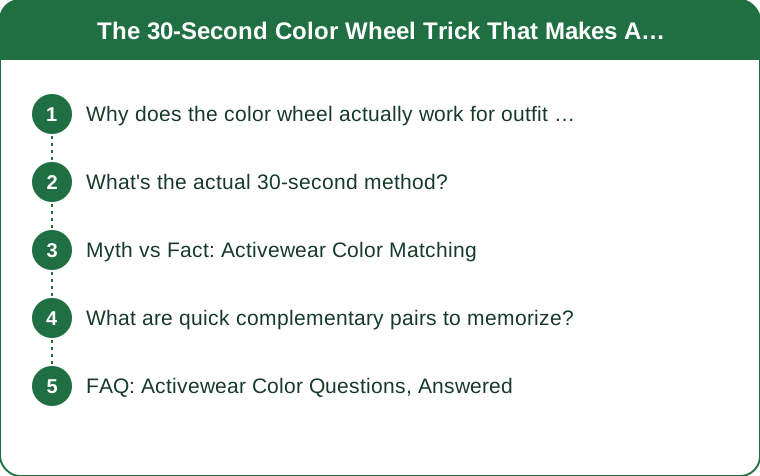
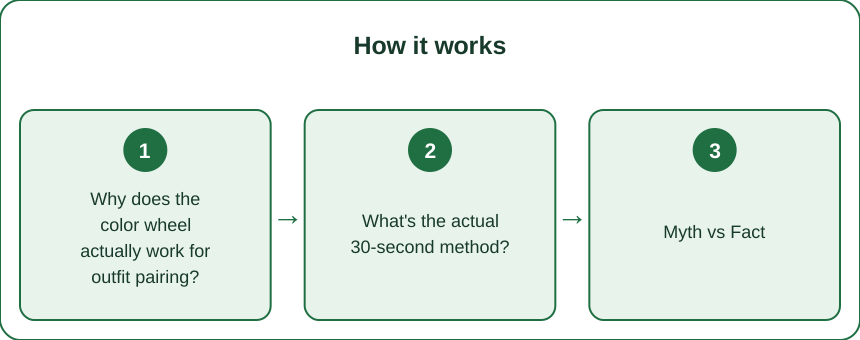
Why does the color wheel actually work for outfit pairing?
Because color relationships aren’t a matter of taste — they’re based on how the eye processes contrast and harmony. Colors directly across from each other on the wheel (complementary pairs) create maximum contrast, which reads as bold and intentional. Colors next to each other (analogous) create a soft, blended look.
Knowing which relationship you’re going for turns ‘does this match’ into a 30-second lookup instead of a guessing game.
What’s the actual 30-second method?
1. Identify your main piece’s color family (e.g., coral = red-orange).
2. Find its complement across the wheel (red-orange’s complement is blue-green/teal).
3. Use the complement for your second piece, and a neutral (black, white, gray) for the third.
This 2-color-plus-neutral formula works because three competing bold colors usually looks busy, while one bold pair plus a neutral reads as styled.

Myth vs Fact: Activewear Color Matching
Myth: Matching sets are the safest choice. Fact: Matching sets remove the option to look intentional — a well-paired complementary combo usually reads as more considered than a monochrome set.
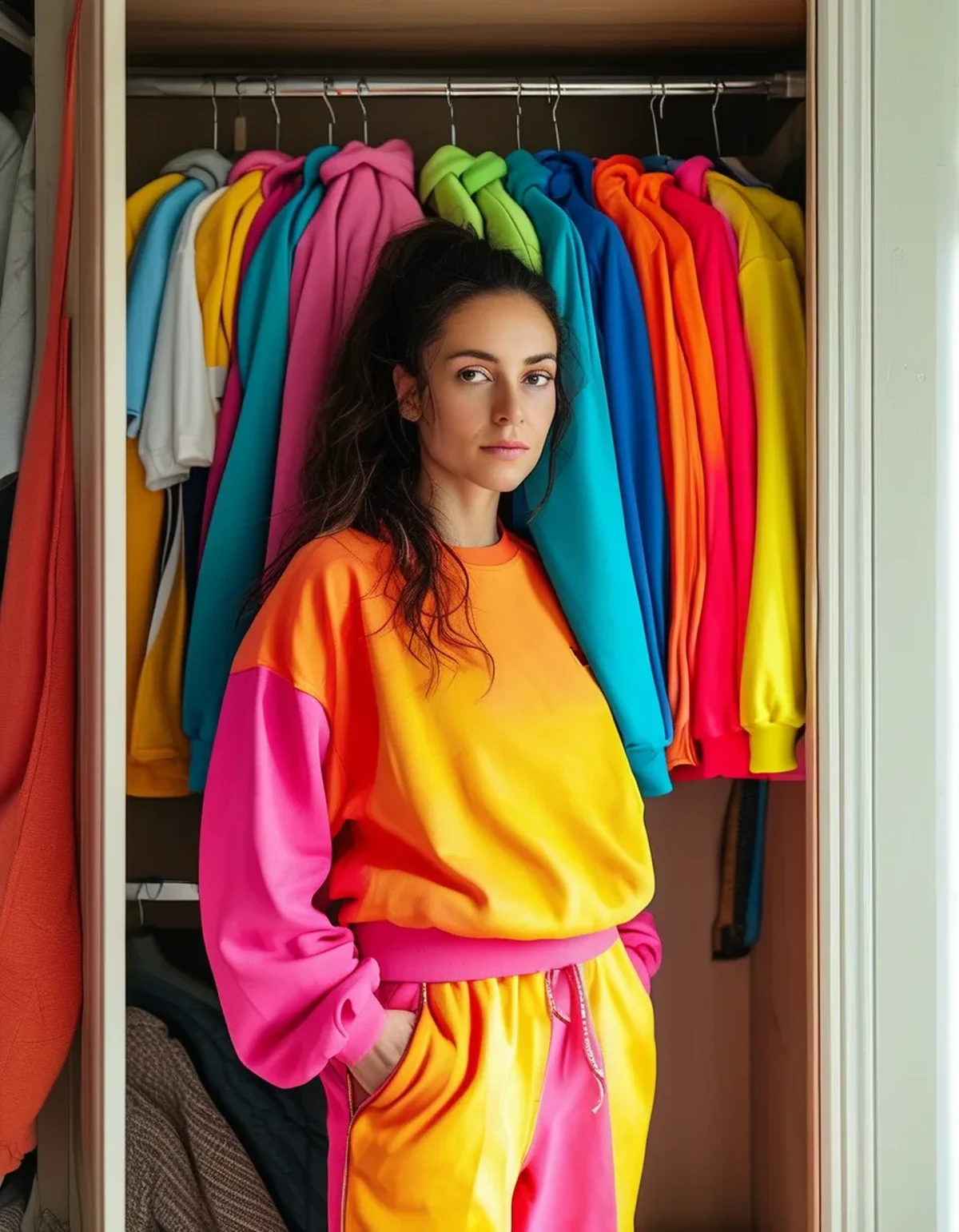
Myth: Bright colors don’t pair well together. Fact: Two bright complementary colors (like orange and teal) work exceptionally well together specifically because of the contrast — it’s clashing analogous brights (like orange next to red) that tends to look chaotic.
Myth: You need to match your shoes to your outfit color exactly. Fact: Shoes work better as either a neutral anchor or picking up just one accent color from the outfit, not a full color match.
What are quick complementary pairs to memorize?
- Coral / red-orange ↔ teal / blue-green
- Purple ↔ yellow-green
- Blue ↔ orange
- Pink (a red family) ↔ green
Keep this list on your phone — check any new activewear purchase against it before buying, and you’ll build a wardrobe where more pieces mix-and-match by default.
FAQ: Activewear Color Questions, Answered
Do complementary colors work for all skin tones?
Yes — the pairing principle is about the colors’ relationship to each other, not skin tone; skin tone affects which specific shade within a color family looks best on you.
What if I only own neutral-colored activewear?
Neutrals pair with everything by design — the color wheel trick becomes most useful once you add your first bold piece and need to know what goes with it.
Is this the same principle interior designers use?
Yes — the same color wheel relationships apply to home decor, makeup, and fashion; it’s one general principle with many applications.
TL;DR:
- Find your main color’s opposite on the wheel — that’s your near-automatic pairing
- Use 2 bold colors plus 1 neutral, not 3 competing brights
- Bright complementary pairs (orange + teal) work; clashing analogous brights (orange + red) often don’t
- Keep a short list of common complementary pairs on your phone for quick shopping checks
You already own more matching combinations than you think — the color wheel just tells you which drawer to look in.
Keep Reading
This article is for general informational and styling purposes only. Fit, sizing, and product availability may vary.