Why Black Activewear Fades to Gray - and How to Keep It Black
Quick Answer: Black activewear grays through three separate routes: dye loss from heat and agitation, a surface haze of micro-damaged fiber that scatters light, and a film of detergent residue and minerals that dulls the color while the dye is still there. Wash cold and inside out with a small dose of liquid detergent, no softener, air dry away from sun - and revive grayed pairs with a fabric shaver pass and a vinegar rinse before you blame the dye.
Hold a new black legging against the pair you bought last winter and the old one looks charcoal in daylight. Here is the twist: a decent share of that fade is not missing dye at all - it is stuff sitting on top of the fabric, and stuff you can partly undo. Black is less a color you buy than a color you maintain.

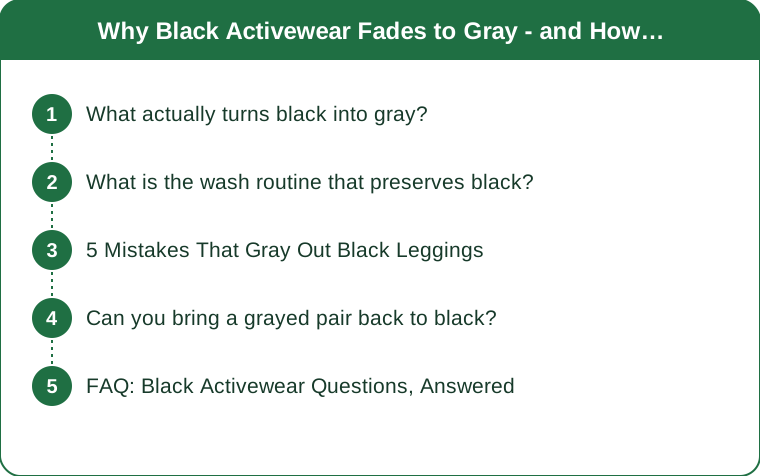
What actually turns black into gray?
Three different mechanisms, which matters because two of them are reversible.
Route one: actual dye loss. Heat, long agitation, and harsh detergents loosen dye from fibers over many washes, and UV from sunny drying breaks dye molecules down chemically. This is the permanent kind of fade - once the dye has left or degraded, no laundry trick restores it. Synthetics hold dye better than cotton, which is why good polyester and nylon leggings fade slower than a black cotton tee, but they are not immune, especially at the high-abrasion zones.
Route two: fiber damage haze. Every wash and every wear raises a microscopic fuzz of broken and loosened fiber ends on the fabric surface. Individually invisible, collectively they scatter light - and scattered light reads as gray-white sheen sitting over the black. This is why fade concentrates at friction zones: inner thighs, the seat, under bag straps. The dye underneath is often still dark, which you can verify by stretching the fabric flat and watching it momentarily deepen.
Route three: residue film. Overdosed detergent that never fully rinses, fabric softener by design, and hard-water minerals all deposit a translucent film on fabric. On white it is invisible; on black it reads as chalky dullness. Sweat and aluminum-based deodorant add their own patchy contribution at waistbands and underarms - sometimes as distinct lighter patches that look like fading but are actually buildup.
The diagnosis test: if a grayed legging looks noticeably darker when wet or stretched, routes two and three are heavily involved - and those are the fixable ones.
What is the wash routine that preserves black?
Seven decisions, each small, compounding across a hundred washes into the difference between black and vague.
1. Cold, always. Heat is the great dye-loosener and elastane-killer. Thirty degrees or the cold setting handles sweat perfectly well.
2. Inside out, darks together. Inside out puts the display surface out of the abrasion line - the same trick that fights pilling fights fade haze. Washing black with black also prevents the slow lint transfer that puts pale fuzz on dark fabric; one shedding white towel can frost an entire dark load.
3. Liquid detergent, small dose, no brighteners. Powders can dissolve incompletely in cold water and contribute to film; many mainstream detergents include optical brighteners designed to make things look whiter - the exact opposite of your goal. A liquid formulated for darks, at half the recommended dose, cleans workout wear fine and rinses cleaner.
4. No fabric softener, ever. It is a deliberate coating - dulling film by design - and it wrecks wicking as a bonus.
5. Gentle, shorter cycles. Agitation time is abrasion time. A 30-minute gentle cycle with a moderate spin does the job.
6. Mesh bag if the load is mixed. Zips and velcro carve fiber haze fast.
7. Air dry, in shade. The dryer combines the two worst inputs - heat and tumbling abrasion - and a sunny line adds UV, which bleaches dye directly. An indoor rack or a shaded line costs nothing and is the single biggest lifespan extender on this list.
And wash less than you think: leggings worn for errands or a light session can air out and go again. Every skipped cycle is a skipped dose of all three graying routes.

5 Mistakes That Gray Out Black Leggings
1. The dryer habit. Heat plus tumble is the fast lane to both dye loss and fiber haze, and it cooks the elastane that keeps the fit. If one habit changes after reading this, make it this one.
2. Sunny line drying. It feels wholesome and it is quietly bleaching your blacks - UV degrades dark dyes fastest of all. Shade dries nearly as fast in August and does none of the damage.
3. Detergent generosity. More soap does not mean cleaner - past the needed dose it means residue the rinse cannot clear, which builds the gray film wash by wash. Halve the cap and watch nothing get dirtier.
4. Mixed loads with lint donors. Towels, fleece, and cotton sweatshirts shed pale fibers that embed in dark knits like frost. Black activewear washes with black activewear - it is a small sorting habit with a visible payoff.
5. Letting sweat sit for days. The gym-bag marinade - damp black leggings balled up until laundry day - lets sweat salts and deodorant residues work on the dye and fibers while growing the funk that then demands hotter, harsher washing. Rinse or at least hang sweaty pairs the same day, then wash normally later.
Can you bring a grayed pair back to black?
Often partly - run this sequence before writing off a favorite pair of yoga pants.
Step one: shave the haze. A fabric shaver passed slowly over the grayed zones - fabric flat and gently stretched - removes the light-scattering fuzz layer, and the underlying dye reads dark again. On leggings grayed mainly at the inner thigh, the before-and-after is genuinely surprising. This is the single most effective revival step and almost nobody tries it.
Step two: strip the film. Run the pair through a warm-cool cycle with no detergent and a half cup of white vinegar, then a plain rinse cycle. Vinegar dissolves alkaline residue and mineral film. If your water is hard, doing this every couple of months keeps the film from re-accumulating. Skip commercial stripping recipes with hot water and borax cocktails for elastane garments - the cure is harsher than the disease.
Step three: assess what remains honestly. Compare against a hidden zone like the inside of the waistband. If the exposed fabric is still lighter after shaving and stripping, that remainder is true dye loss.
On re-dyeing: mostly no. Standard all-purpose dyes barely bond to polyester at the temperatures home methods reach, nylon takes dye better but blends take it unevenly, and boiling - which synthetic dyeing wants - destroys elastane. For a nearly-dead pair it is a fun experiment; for a pair you love, it is a gamble that usually returns blotchy charcoal.
And buy the next pair for longevity: deep solution-dyed or high-quality disperse-dyed synthetics, a dense flat-faced knit, and buttery-soft fabrics reserved for low-friction duty - the plushest surfaces haze fastest. A black legging cared for this way stays event-worthy for years, which is the cheapest wardrobe math there is.
FAQ: Black Activewear Questions, Answered
Why do my black leggings look gray after a few months?
Three stacked causes: some dye loss from heat and agitation, a surface fuzz of damaged fibers that scatters light, and detergent-softener-mineral film. The last two are removable - a fabric shaver pass plus a vinegar rinse often restores most of the depth.
Does vinegar really keep black clothes black?
Vinegar does not lock dye - that claim is folklore - but an occasional vinegar rinse dissolves the residue film that dulls dark fabric, which visibly deepens the look. Use it as a de-filmer, not a dye sealer.
Should black leggings go in the dryer?
No. Heat and tumbling drive all three graying routes at once and degrade the stretch. Air drying in shade is the biggest single lifespan upgrade available, and synthetics dry fast anyway.
Can I dye faded leggings black again?
Usually not well - polyester resists home dyeing, blends take color unevenly, and the hot water proper synthetic dyeing requires ruins elastane. Revive with shaving and stripping instead, and save dye experiments for pairs you have nothing to lose on.
TL;DR:
- Black grays by three routes - dye loss, fiber haze, residue film - and two of the three are reversible.
- The preserving wash: cold, inside out, darks only, half-dose dark liquid, no softener, gentle cycle, shade dry.
- The two killers are the dryer and the sunny clothesline; the sneaky one is detergent overdose.
- Revive grayed pairs with a fabric shaver pass and a vinegar strip before blaming the dye - and skip home re-dyeing.
Black is a maintenance contract, not a purchase. Sign it properly and one good pair outlasts three neglected ones.
See It in Motion
Seen here: Super High Waist Embossed Yoga Leggings with Inner Pocket — shop it on bubblelime.com
Keep Reading
This article is for general informational and styling purposes only. Fit, sizing, and product availability may vary.